
Storytelling That Builds Power: Fahe at NAHRO’s Executive Leadership Convening
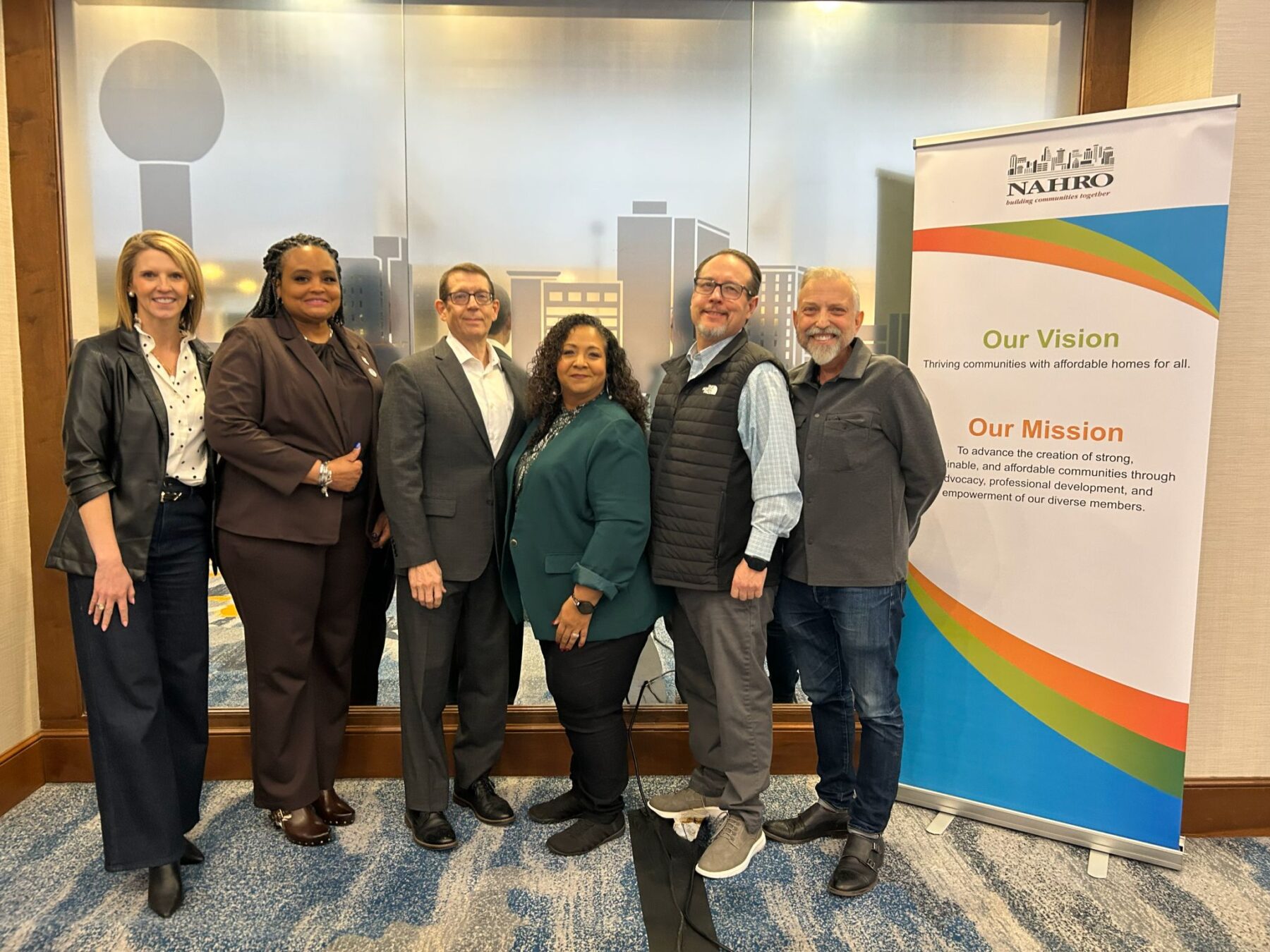
In January, National Association of Housing and Redevelopment Officials (NAHRO) convened executive leaders in Tennessee, including NAHRO CEO Mark Thiele and Fahe Member and Executive Director of Oak Ridge Housing Authority Maria Catron, to focus on one of the most essential tools in housing and community development: storytelling.
As part of a full day of reflection and hands-on storytelling exercises, Jim King, President and CEO of Fahe, anchored the conversation with stories from Appalachia—stories that move beyond data points to the human realities behind housing policy and practice.
“When it comes to housing, data may convince people—but stories move them.”
Jim’s remarks resonated deeply with NAHRO’s network of more than 26,000 housing and community development professionals who collectively administer over 3 million homes nationwide. His message was clear: storytelling in housing is not about inspiration alone—it is about building power, coalitions, and the will to act.
Appalachia: Distance, Disinvestment, and Determination

Jim began by grounding the room in the lived realities of Central Appalachia—a vast, largely rural region marked by extraordinary beauty and persistent structural challenges. Sparse population, long distances, and low incomes combine to make housing development unusually complex.
“Distance is expensive, and volume simply doesn’t exist.”
In places where median incomes can be less than half the national average, capital is harder to attract and even harder to sustain. Traditional financial systems often overlook these communities, reinforcing cycles of disinvestment that housing providers must work tirelessly to overcome.
Building Systems, Not One-Off Solutions
Fahe’s work, Jim explained, is rooted in collective impact. As a network of more than 50 nonprofit housing and community development organizations across six states, Fahe operates as a regional system-builder—aligning capital, policy, and capacity so communities can succeed together.
“If you want to go fast, go alone. If you want to go far—go with friends.”
Rather than chasing individual transactions, Fahe focuses on building durable systems: shared pipelines, aligned programs, and trusted relationships that allow scale to emerge even in the hardest places.
A Door as a Symbol—and a Call to Action
One story, in particular, stayed with the room. At a homeownership closing, an eight-year-old girl looked up and asked a simple question:
“Does this mean I get a door?”
For Jim, that moment captured the essence of the housing crisis and the work ahead. A door represents safety, dignity, and control over one’s own space—but also opportunity and possibility.
“We stop counting deals and start counting doors opened.”
Across Appalachia and the nation, decades of underbuilding and underinvestment have left families waiting. Fahe’s response—through its Housing Can’t Wait® campaign—is to stop waiting for perfect conditions and instead mobilize the capital, partnerships, and leadership needed now.
Housing Can’t Wait—And Neither Can We
Jim closed by challenging NAHRO leaders to see this moment as a shared one. Solving the housing crisis at the scale required will demand deeper collaboration across public housing authorities, CDFIs, philanthropy, finance, and policy.
“Housing can’t wait. And neither can we.”
The convening in Tennessee underscored a powerful truth: when housing leaders pair rigorous data with authentic stories, they don’t just describe the problem—they create the momentum to solve it.