
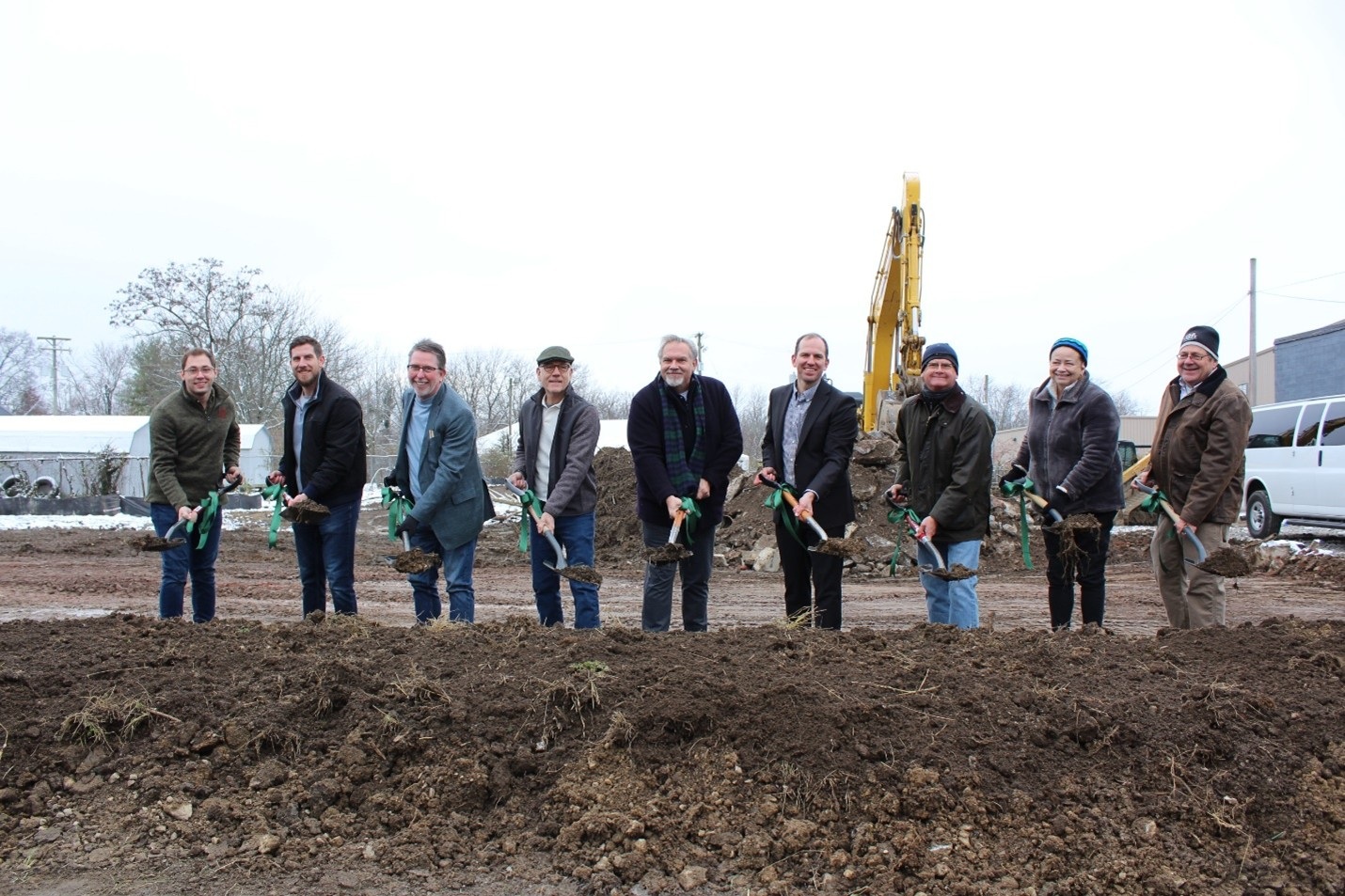
A Local Team Comes Together at the Railyard
In Lexington, Kentucky, a former industrial site is being reimagined into something communities across Appalachia urgently need: walkable workforce housing built within existing infrastructure.
The Railyard at 1000 Delaware Avenue is a mixed-use infill development that reflects what is possible when local expertise, mission-aligned capital, and community-centered planning come together. For Fahe and its Members, the project is one of many place-based developments underway across the region—each tailored to local context and advancing shared goals of affordability, sustainability, and long-term community benefit.
The project will deliver 32 rental homes, including 12 income-restricted units affordable to households earning up to 80% of Area Median Income, alongside two street-level commercial spaces supporting local businesses. Located on a one-acre infill site within Lexington’s Urban Service Area, the Railyard leverages existing utilities, transportation networks, and neighborhood assets—an approach that reduces costs while strengthening the surrounding community.
Developer Will Hanrahan of 1000 Delaware LLC reports that, “Commercial leasing is now underway, with residential leasing expected to begin later this year and project completion targeted for Q1 2027.”
The Railyard’s significance lies not only in what is being built, but in how. Nationally recognized urban designer and Incremental Development Alliance founding member R. John Anderson helped shape the project’s early planning and code strategy. “This is one of the boldest first-time developer projects I’ve seen,” Anderson said. “We focused on making it buildable, cost-conscious, and grounded in its setting.”
A locally rooted team of contractors, designers, planners, engineers, and investors collaborated from the outset to balance design quality, regulatory complexity, and financial feasibility. Investor and development partner Paul Metzler of Metzler Build said, “We saw in the Railyard a chance to invest in housing where it’s needed most—close to jobs, small businesses, and existing infrastructure.”
This level of coordination is essential for infill housing, which often carries greater upfront complexity than greenfield development. It is also where CDFIs and housing networks like Fahe add value—aligning capital, technical expertise, and mission to move projects from concept to construction.
For Fahe and our Members, the Railyard stands alongside dozens of similar efforts across Appalachia—each one addressing local housing needs while contributing to a broader regional strategy to increase supply, support workforce stability, and reinvest in existing communities.
As Fahe advances its Housing Can’t Wait® challenge to expand housing access at scale, the Railyard offers a clear example of that work in practice: local teams working collaboratively to deliver housing that communities can sustain and be proud of.